Trading Tips
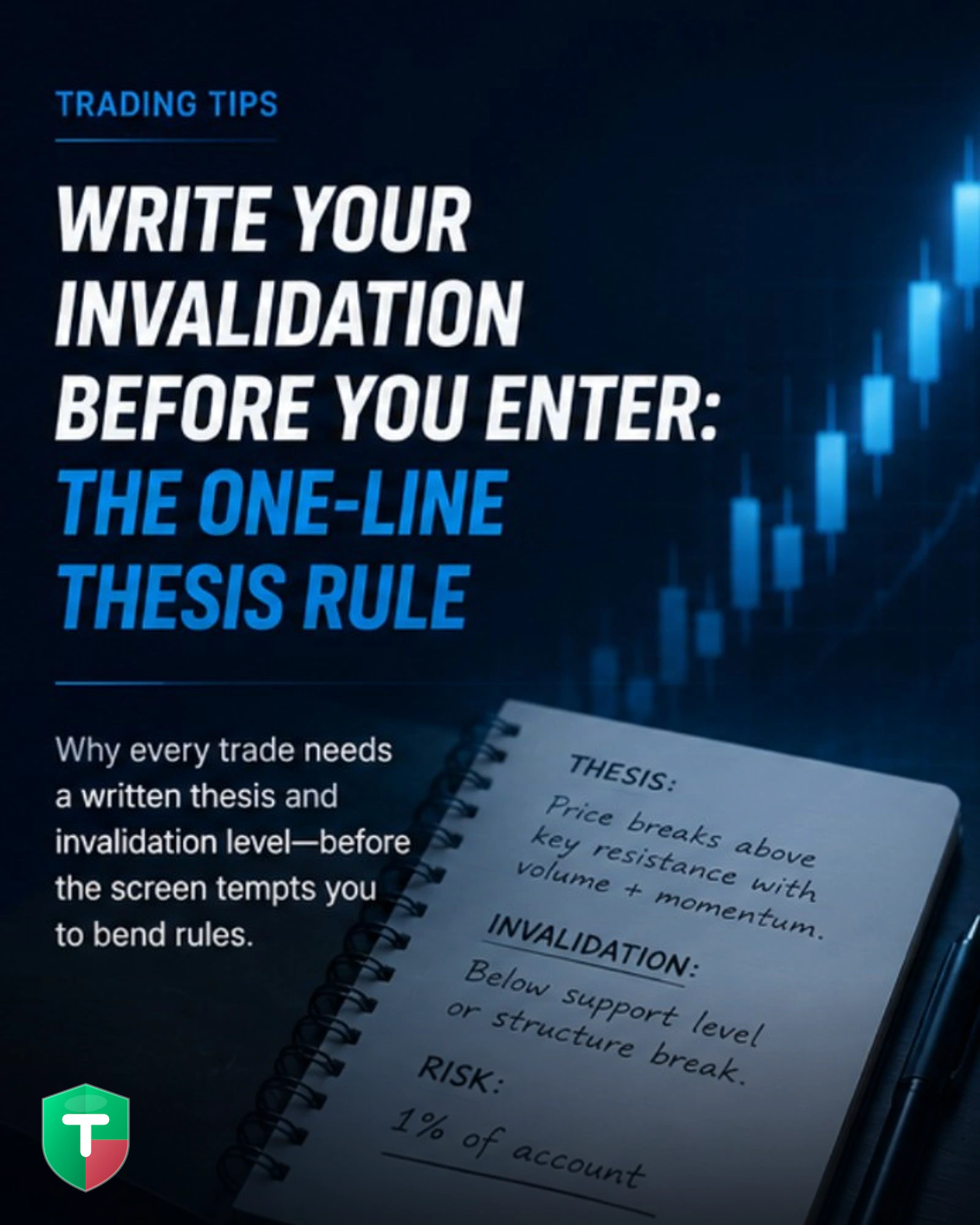
Write Your Invalidation Before You Enter: The One-Line Thesis Rule
Quick answer
Jonathan Rose and Ken Macro on why every trade needs a written thesis and invalidation level—before the screen tempts you to bend rules.
Key takeaways
- What is a trade thesis?
- What is invalidation in trading?
- Why do prop traders fail without invalidation?
If You Can't Fill One Line, Don't Trade
Floor trader Jonathan Rose (InvestorPlace framework, June 2026) puts it simply: keep a one-line thesis field in your trade log. If you cannot fill it in, do not take the trade.
Ken Macro's 2026 trading plan template (kenmacro.com) goes further: a real plan is conditional, not a goals page. Every setup needs written invalidation. A setup with no invalidation is not part of a plan.
Prop firm software enforces max loss; it does not enforce intellectual honesty. That is on you.
Thesis vs Prediction
| Thesis (good) | Prediction (bad) | |---------------|------------------| | "If ES holds overnight low and reclaims VWAP, auction shifts long" | "Market goes up today" | | "EUR/USD rejection at weekly supply after CPI beat" | "Dollar weak this week" |
The thesis ties to observable levels and catalysts—similar to how The Patel Investor structures trades: define thesis first, then match risk/reward to the setup type.
Invalidation Must Be Pre-Written
Before entry, log:
- Entry trigger (exact condition)
- Stop / invalidation (price or structure break)
- Target or time stop
- Risk in $ and % of account
When price hits invalidation, exit. Moving stops "just this once" is how Dion Trades lost $60K before his turnaround.
Portfolio-Level Risk (Advanced)
Rose also recommends managing risk across all open positions, not per trade in isolation. If max portfolio heat is $5,000, the sum of worst-case losses on open trades must stay under that cap—relevant when running multiple correlated forex pairs on a prop account.
Three Plan Killers to Avoid
From Ken Macro's desk framework:
- No written invalidation → every loss becomes negotiation
- Goals document mistaken for plan → affirmations without conditions
- Reviewing P&L only, not decisions → reinforces outcome bias
Sources
- Jonathan Rose: Repeatable active trading system (June 2026)
- Ken Macro: How to build a trading plan 2026 (May 2026)
- The Patel Investor: Exactly how I trade (May 2026)
Practice on demo, then apply on Traders Club challenges with our how to pass playbook.
Frequently asked questions
- What is a trade thesis?
- A one-sentence reason you are in the trade—what must be true for the idea to work. If you cannot write it, you should not enter.
- What is invalidation in trading?
- The price level or condition that proves your thesis wrong. Hit it, exit—no negotiation.
- Why do prop traders fail without invalidation?
- Every losing trade becomes a debate; hope replaces rules until daily drawdown is gone.
Related articles
 Trading Tips
The 3-Strike Rule and Circuit Breakers Every Prop Trader Needs
Stop after three consecutive losses—the circuit breaker habit cited by prop traders and discipline coaches to prevent revenge spirals.
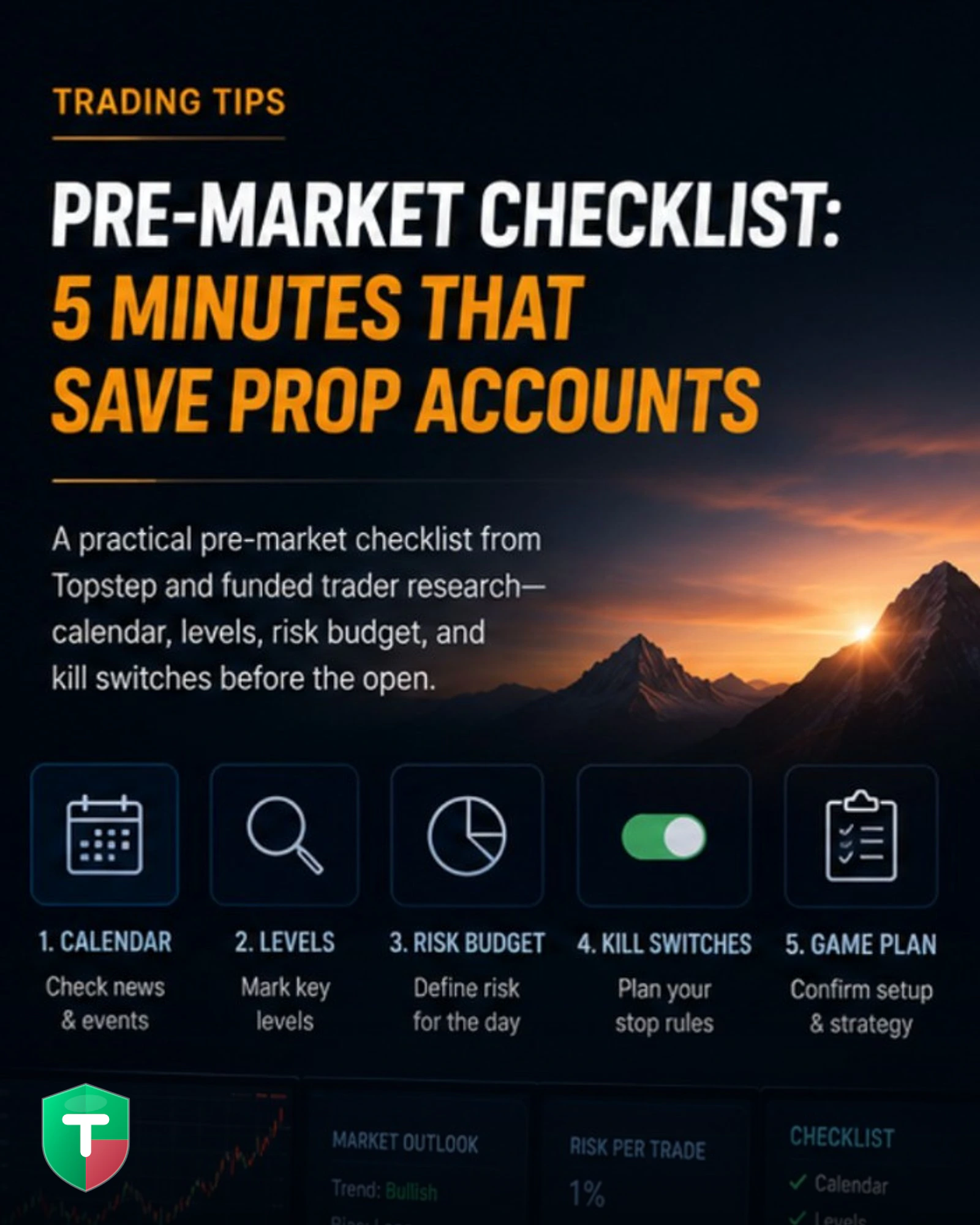 Trading Tips
Pre-Market Checklist: 5 Minutes That Save Prop Accounts
A practical pre-market checklist from Topstep and funded trader research—calendar, levels, risk budget, and kill switches before the open.
 Trading Tips
The 1% Rule: Why Professional Traders Cap Risk Per Trade
The 1% risk rule used by funded traders and prop firms—how to calculate it, why it works, and how daily loss limits stack on top.