Trading Tips
The 1% Rule: Why Professional Traders Cap Risk Per Trade
Quick answer
The 1% risk rule used by funded traders and prop firms—how to calculate it, why it works, and how daily loss limits stack on top.
Key takeaways
- What is the 1% risk rule in trading?
- Is 1% risk too conservative for prop challenges?
- What daily loss limit pairs with the 1% rule?

The Most Cited Rule in Modern Retail Trading
Across Investopedia's professional trading rules, 2026 retail risk guides, and prop firm education, one principle repeats: risk a small, fixed fraction of equity per trade.
The 1% rule means if you have a $50,000 account, you lose at most $500 on a single stopped-out trade. It forces you to think in probabilities and streaks, not lottery tickets.
Why 1% Works Mathematically
Losing streaks happen even with edge. At 1% risk:
- 5 losses in a row = ~4.9% drawdown
- 10 losses in a row = ~9.6% drawdown
On a typical 10% max loss prop evaluation, ten consecutive full losses still (barely) leave room—whereas 2% risk per trade would breach in five losses.
Prop traders often use 0.25%–0.5% during challenges for extra buffer—see our position sizing guide.
How to Calculate It
Risk dollars = Account equity × Risk %
Position size = Risk dollars ÷ Stop distance in dollars
Example: $100K account, 0.5% risk ($500), 40-pip stop on EUR/USD → size lots so stop = $500 loss.
Never invert the math (pick lots first, hope stop works).
Stack the Daily Cap
Ollatrade's 2026 trading tips recommend a 3% daily loss limit: hit it, stop for the day. That is three 1% losses—or fewer if you use 0.5% risk with a bad session.
Prop firm daily drawdown rules are the external version of this cap. Your job is to stop before the platform stops you.
Volatility Adjustment
Fixed lot size ignores changing volatility. When ATR expands (gold, NFP weeks), widen stop or shrink size so dollar risk stays at 1%. Same rule, different instrument behavior.
Common Mistakes
- Risking 2%–3% because "this setup is A+"
- Ignoring correlated positions (three USD trades = one bet)
- Increasing size after wins without recalculating
Sources
Apply the 1% rule on your next Traders Club challenge and pair it with daily drawdown rules.
Frequently asked questions
- What is the 1% risk rule in trading?
- You risk no more than 1% of account equity on any single trade. On a $100,000 account, that is $1,000 maximum loss if your stop is hit.
- Is 1% risk too conservative for prop challenges?
- Many funded traders use 0.25%–1% during evaluations. The goal is survival through variance, not maximum speed to profit target.
- What daily loss limit pairs with the 1% rule?
- A common self-imposed cap is 3% daily loss—three full 1% losses—then stop trading for the day.
Related articles
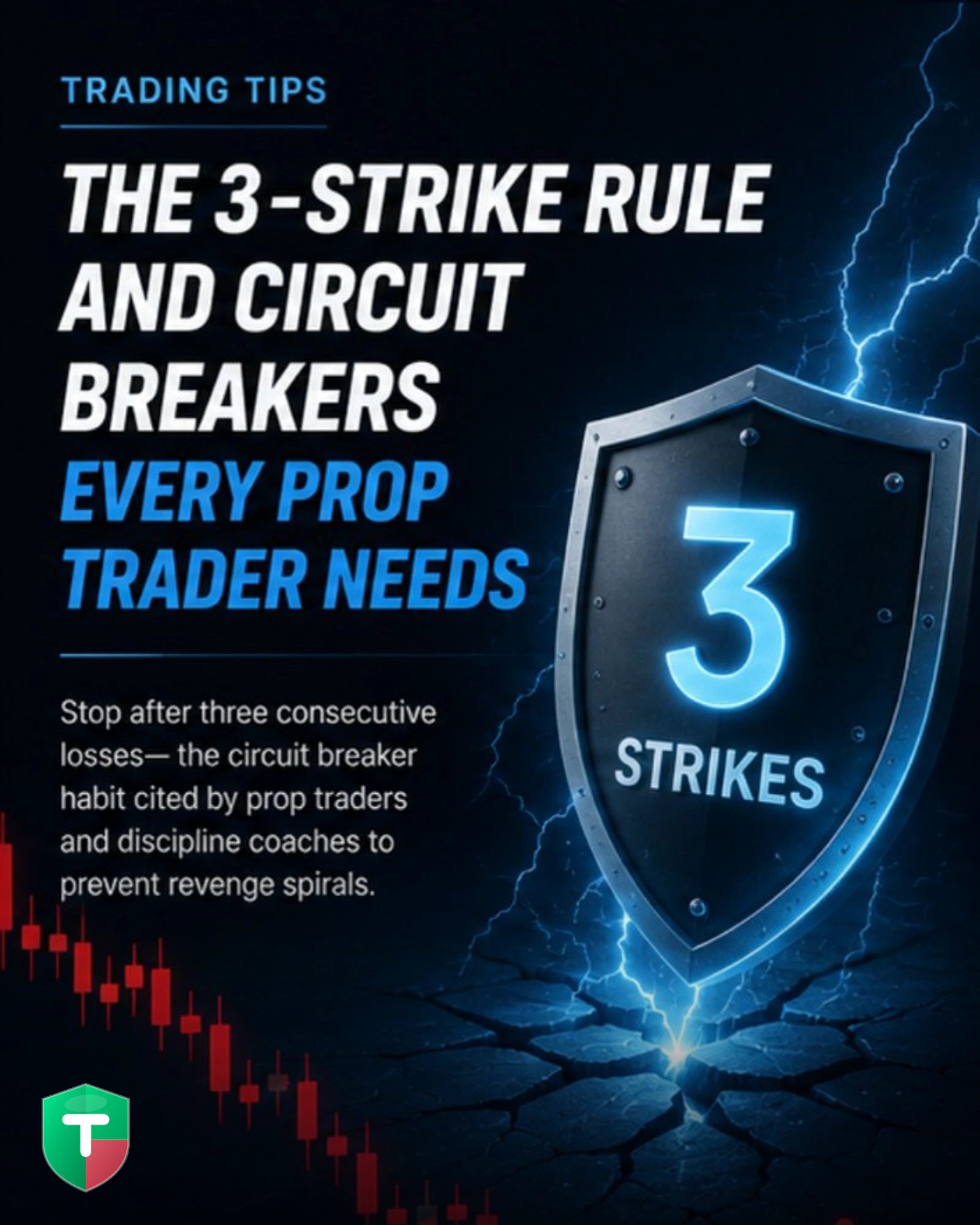 Trading Tips
The 3-Strike Rule and Circuit Breakers Every Prop Trader Needs
Stop after three consecutive losses—the circuit breaker habit cited by prop traders and discipline coaches to prevent revenge spirals.
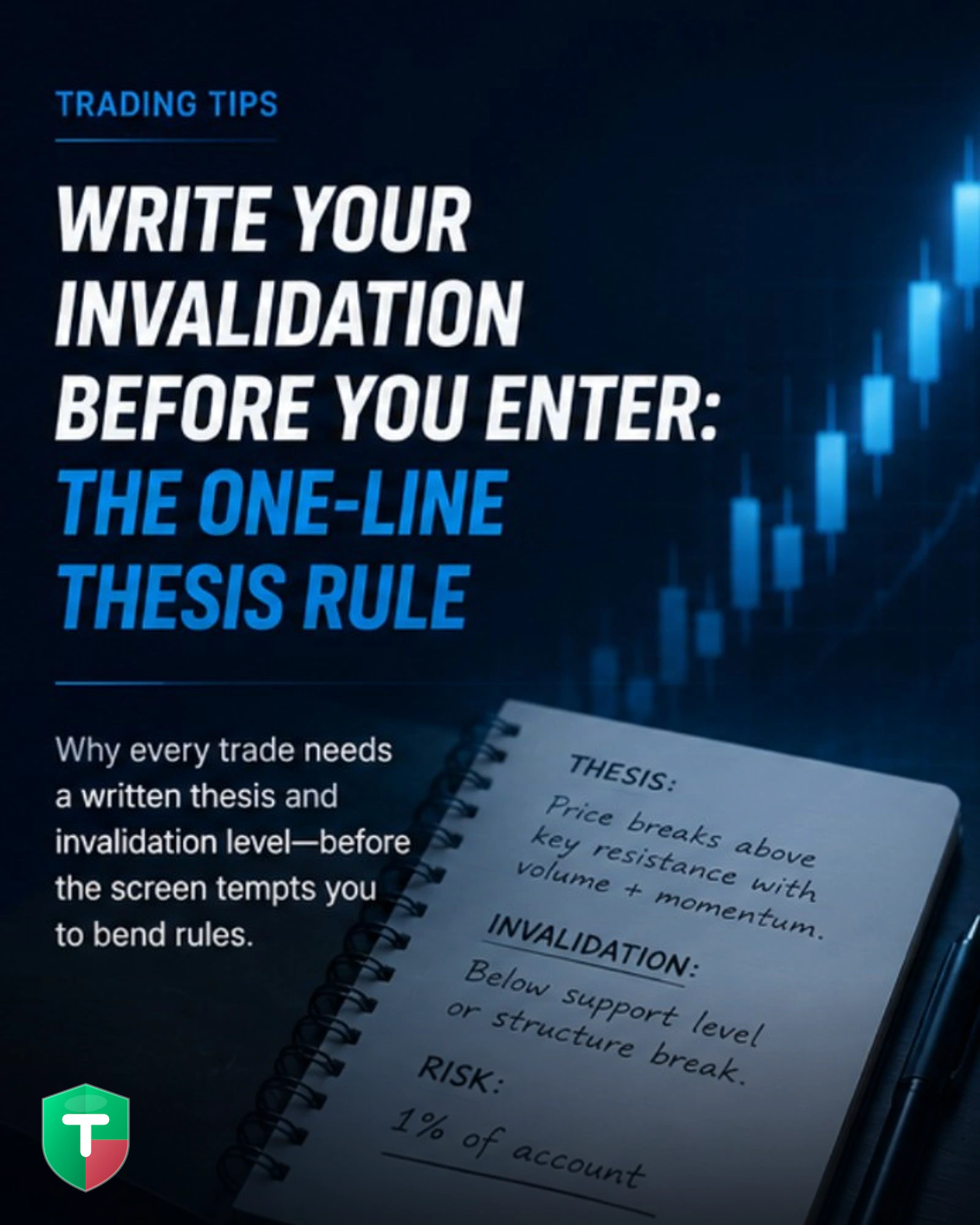 Trading Tips
Write Your Invalidation Before You Enter: The One-Line Thesis Rule
Jonathan Rose and Ken Macro on why every trade needs a written thesis and invalidation level—before the screen tempts you to bend rules.
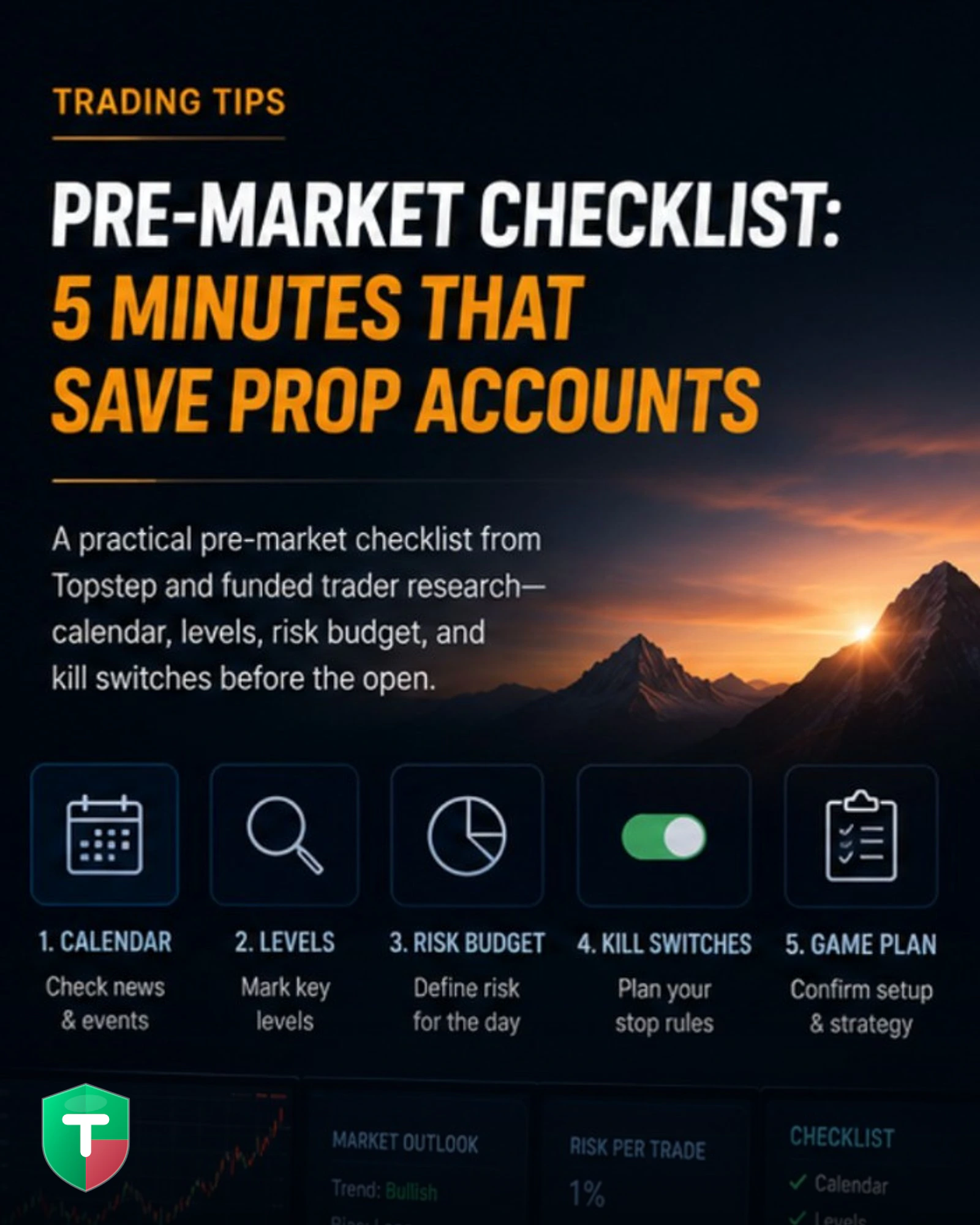 Trading Tips
Pre-Market Checklist: 5 Minutes That Save Prop Accounts
A practical pre-market checklist from Topstep and funded trader research—calendar, levels, risk budget, and kill switches before the open.